Pipeline stringing along the full length of the Main Onshore Pipeline (the Pipeline) is now complete, marking a significant step forward in the construction of the project.
More than 31km of pipeline has now been delivered and laid out between Stanlow in Chesire and Flint in Flintshire, ready for the next stages of construction.
Pipeline stringing is the process of laying individual sections of pipe out end-to-end along its approved route. Each individual pipe section (approx. 18 metres in length) has been carefully delivered and lined up in sequence, ensuring they are in the correct position for the next stage of construction.
Our construction contractor, United Infrastructure (UI) and its specialist welding subcontractor, CRC Evans, is now carrying out welding and coating activities on sections of the Pipeline (here). After this, sections of the Pipeline will be lowered into the open-cut trench, using pipelayers fitted with side booms for stability (known as a 'lower and lay' method).
Once the Pipeline has been installed, the open-cut trench will be backfilled with the excavated soil and surrounding ground will be reinstated as close as possible to its original conditional. As a result, residents may notice increased preparatory activities and on-site personnel working along the route, as construction of the Pipeline continues into its later stages.
More information on the construction of the Pipeline will be added to the Latest News Section of the HyNet Hub section in advance.
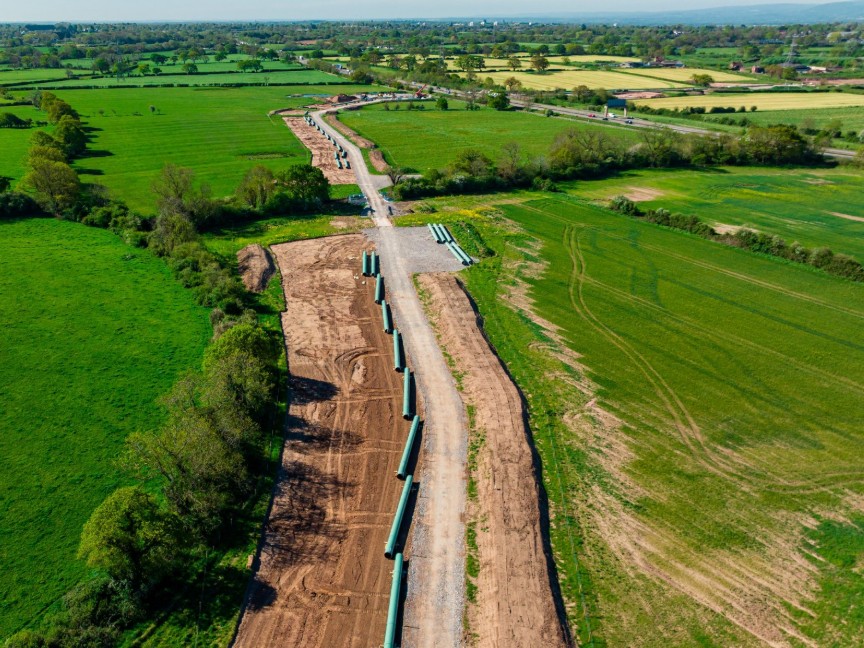
Image of pipeline stringing along the Main Onshore Pipeline route
More than 31km of pipeline has now been delivered and laid out between Stanlow in Chesire and Flint in Flintshire, ready for the next stages of construction.
What is pipeline stringing?
Pipeline stringing is the process of laying individual sections of pipe out end-to-end along its approved route. Each individual pipe section (approx. 18 metres in length) has been carefully delivered and lined up in sequence, ensuring they are in the correct position for the next stage of construction.
What happens next?
Our construction contractor, United Infrastructure (UI) and its specialist welding subcontractor, CRC Evans, is now carrying out welding and coating activities on sections of the Pipeline (here). After this, sections of the Pipeline will be lowered into the open-cut trench, using pipelayers fitted with side booms for stability (known as a 'lower and lay' method).
Once the Pipeline has been installed, the open-cut trench will be backfilled with the excavated soil and surrounding ground will be reinstated as close as possible to its original conditional. As a result, residents may notice increased preparatory activities and on-site personnel working along the route, as construction of the Pipeline continues into its later stages.
More information on the construction of the Pipeline will be added to the Latest News Section of the HyNet Hub section in advance.
Image of pipeline stringing along the Main Onshore Pipeline route